




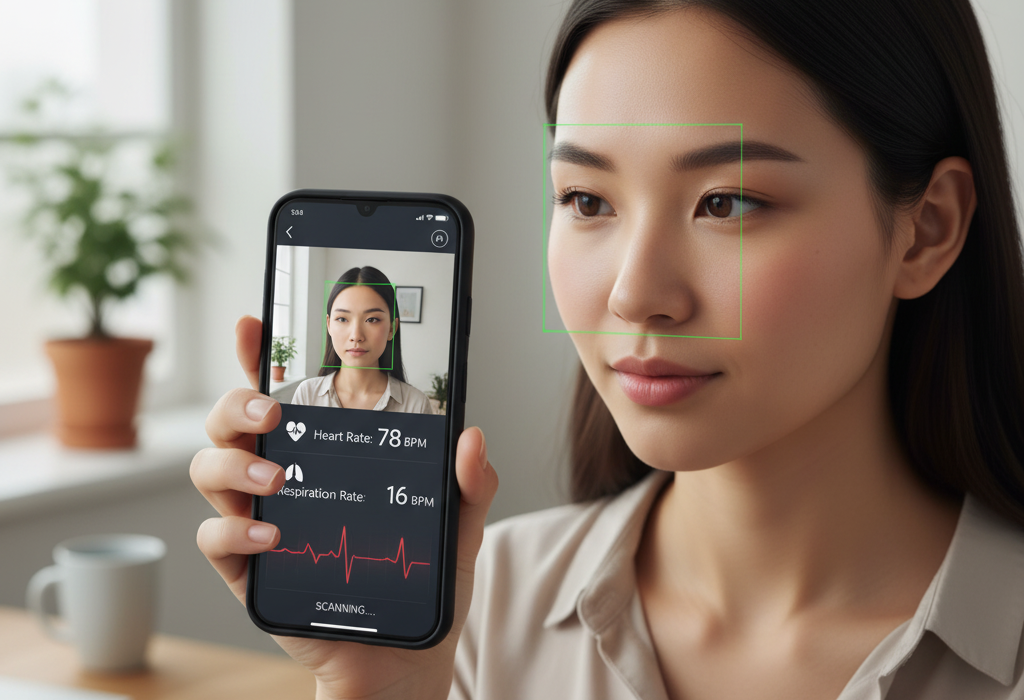
Both Photoplethysmography (PPG) and remote Photoplethysmography (rPPG) are techniques used to measure physiological vital signs by detecting changes in blood volume in the microvascular bed.
The choice between PPG and rPPG depends largely on the application, desired convenience, and available resources.
Here’s a breakdown to help you decide when to choose PPG over rPPG:
Choose PPG (Contact-based) when:
- Higher Accuracy and Reliability are Paramount: PPG typically provides more robust and accurate signals because the sensor is in direct contact with the skin, minimizing motion artifacts and environmental interference. This is crucial for medical-grade devices and applications where precision is critical.
- Continuous Monitoring is Required with Minimal User Intervention (after initial setup): Once a PPG sensor (like a pulse oximeter clip or a wearable wristband) is attached, it can continuously monitor vitals without requiring the user to remain still or in a specific position relative to a camera.
- Specific Physiological Parameters Beyond Heart Rate are Needed: Many PPG devices can measure oxygen saturation (SpO2) using multiple wavelengths of light, which rPPG currently struggles to do accurately and reliably. Some advanced PPG sensors can also infer blood pressure more directly than rPPG.
- Motion Artifacts are a Significant Concern: While PPG is still susceptible to motion artifacts, the direct contact provides a stronger signal that is generally less affected by slight movements compared to rPPG, which relies on subtle color changes from a distance.
- Environmental Lighting Conditions are Unpredictable or Poor: PPG sensors use their own light source (LEDs) and a photodetector, making them less dependent on ambient lighting conditions, unlike rPPG which relies on external light.
- The Application Involves Water or Other Obscuring Elements: For monitoring vitals in aquatic environments or situations where the skin might be partially obscured, a direct contact PPG sensor would be more effective.
- Cost of Hardware is Not the Primary Limiting Factor (for a single dedicated device): While some advanced PPG systems can be expensive, basic PPG sensors are relatively inexpensive and widely available, often integrated into fitness trackers and smartwatches.
- Regulation and Certification for Medical Use are Required: Currently, most medically certified vital sign monitors rely on PPG technology due to its established accuracy and reliability.
Examples of PPG applications:
- Pulse oximeters in hospitals
- Wearable fitness trackers and smartwatches for heart rate and SpO2
- Continuous glucose monitors (in some non-invasive concepts)
- Anesthesia monitoring
- Sleep studies
In essence, if your application demands the highest possible accuracy, reliability, and the measurement of specific parameters like SpO2, and direct contact with the skin is feasible and acceptable, then PPG is the preferred choice.
 English
  Español
  Català
  Italiano
  বাংলা
বাংলা  தமிழ்
தமிழ்  اردو
اردو  हिन्दी